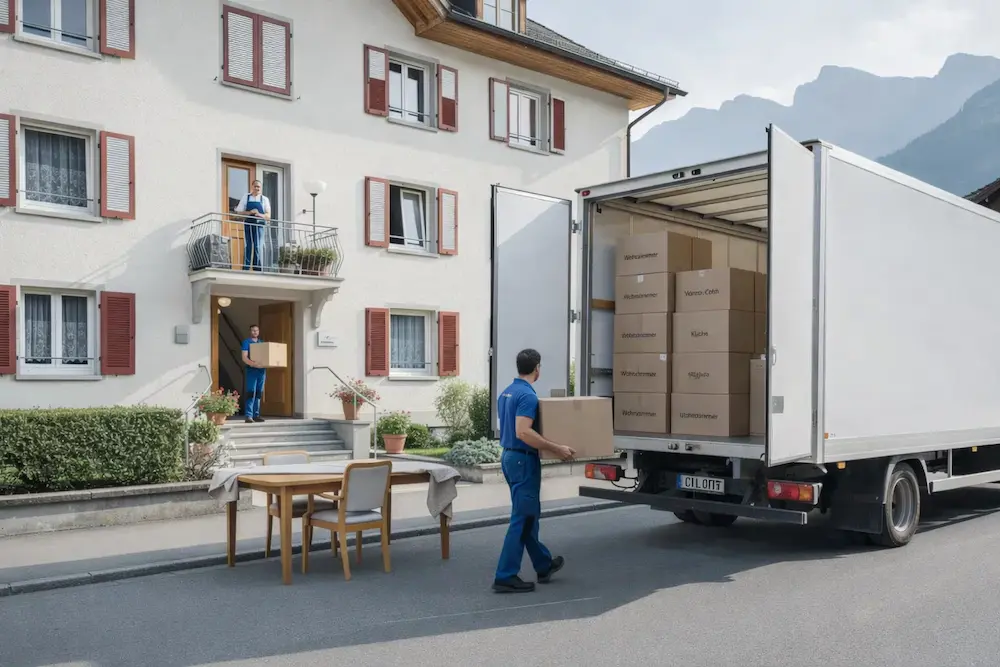

A change of accommodation is the ideal opportunity to thoroughly empty the cellar, attic and cupboards. But as soon as the unusable furniture, the old mattress and the faulty refrigerator are found in the hallway, a crucial logistical question arises: how to get rid of this burden in the most efficient and least expensive way?
In Switzerland, three routes are well established: the official collection of bulky waste from the municipality with paid stickers, the independent journey to the regional recycling center or the use of a professional emptying company. Each option has clear advantages and disadvantages in terms of costs, time and physical effort.
To make your choice easier, we have analyzed the different evacuation routes in detail. Whether you opt for the more time-consuming do-it-yourself route or prefer to delegate the work – structured planning protects you from unpleasant surprises on the moving date. A well-thought-out evacuation not only saves money, but also preserves your nerves in an already stressful phase of life.
The big comparison of evacuation options
The following table directly compares the three main evacuation options in Switzerland. Prices serve as a non-binding guide. Prices, acceptance conditions and fees are regularly adapted by municipalities and recycling centers.
Indicative values appear on the reference page Evacuation Switzerland. Only the quote from the company concerned is authentic – this guide is not a second price list.
The polluter pays principle and the “bulky waste trap” in Switzerland
The disposal of household waste is strictly regulated by law in Switzerland. According to art. 32a of the Environmental Protection Act (LPE), the polluter pays principle applies. Disposal costs must be covered by fees proportional to the quantity and weight of waste.
In many municipalities, this is done via fees on bags or special stickers for bulky items. Bulky items should therefore not be left without first checking local rules. Depending on the municipality, fees or fines may be applied in the event of unauthorized deposit; the provisions in force at the place of residence are binding.
Prices, permitted weight and deposit rules also vary between cantons, towns and municipalities. So before moving, check the waste calendar and the prices page for your municipality, rather than relying on old isolated prices.
Not everything is bulky. Special waste such as paints, chemicals or batteries must be taken to separate collection points. Electrical appliances go through the recovery and recycling channels provided; the points of sale list the types of devices they quote.
Which does not fall under bulky items
The exact classification may vary depending on the municipality. This table presents the usual allocation in Switzerland :
Object | Evacuation usual |
|---|---|
Sofa, armchair or mattress | Generally bulky; check the rules and stickers of the municipality |
Refrigerator or television | Electric appliance; take-back point or specialist trade |
Paints and chemical products | Special waste; municipal collection or specialized point |
Batteries and accumulators | Separate collection of batteries or point of sale |
Do-it-yourself: when the recycling center is worth it
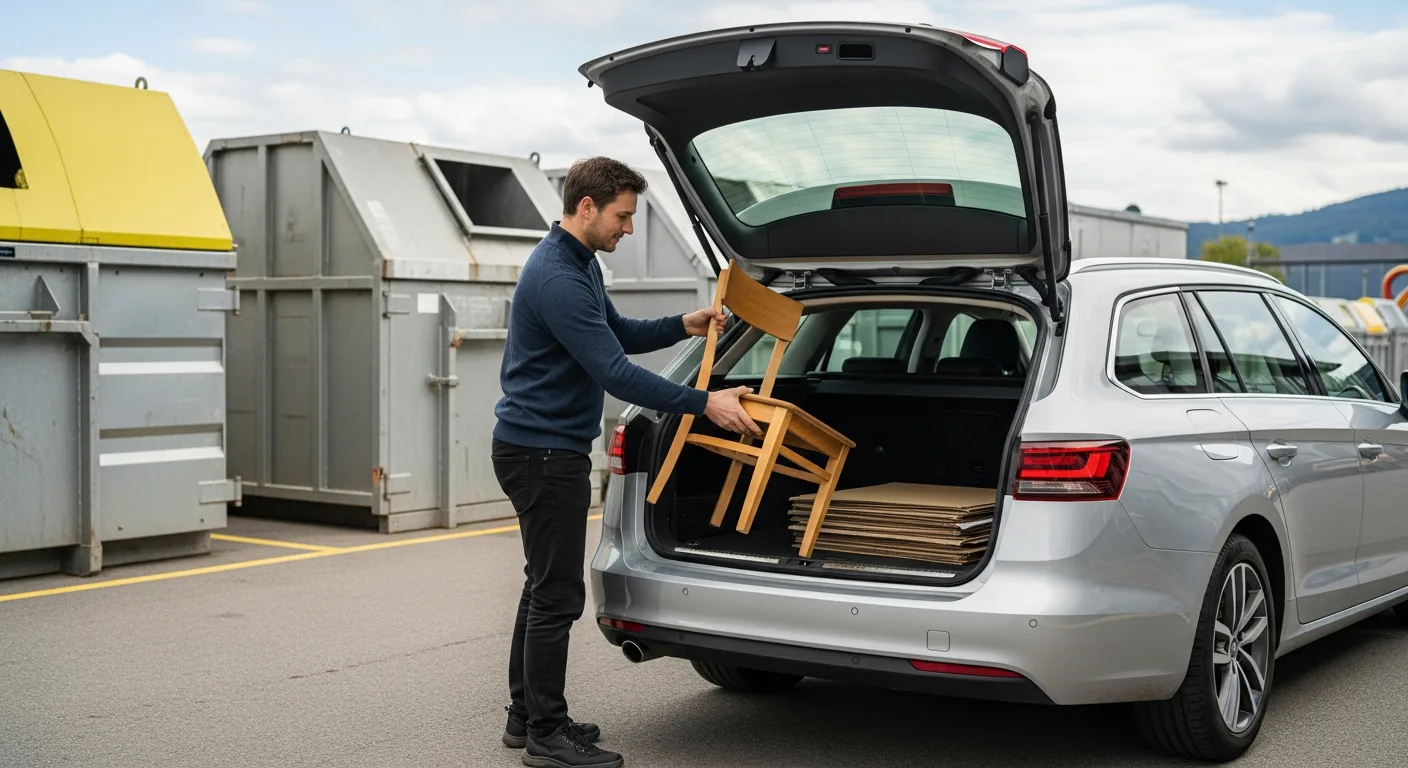
If you have a large car or of a utility at a good price, the trip to a regional recycling center can be economical. Many private and municipal disposal centers charge by actual weight. As an indication, the rates for mixed and bulky combustible waste are often a few tens of cents per kilogram depending on the operator; minimum fees may apply. Check the current rate before the trip.
Sort the materials in advance according to the instructions at the collection point. The Federal Office for the Environment (FOEN) provides information on waste reduction, reuse and recycling. For old wood, metal, cardboard and electrical appliances, the sectors and prices differ; a fraction is only free if the local collection point provides for it.
Unsorted mixed waste often costs more than properly separated recyclable materials. Use the directory of collection points in your municipality or an up-to-date recycling card and clarify times, quantities accepted and fees before the trip.
Professional disposal service: procedure and costs
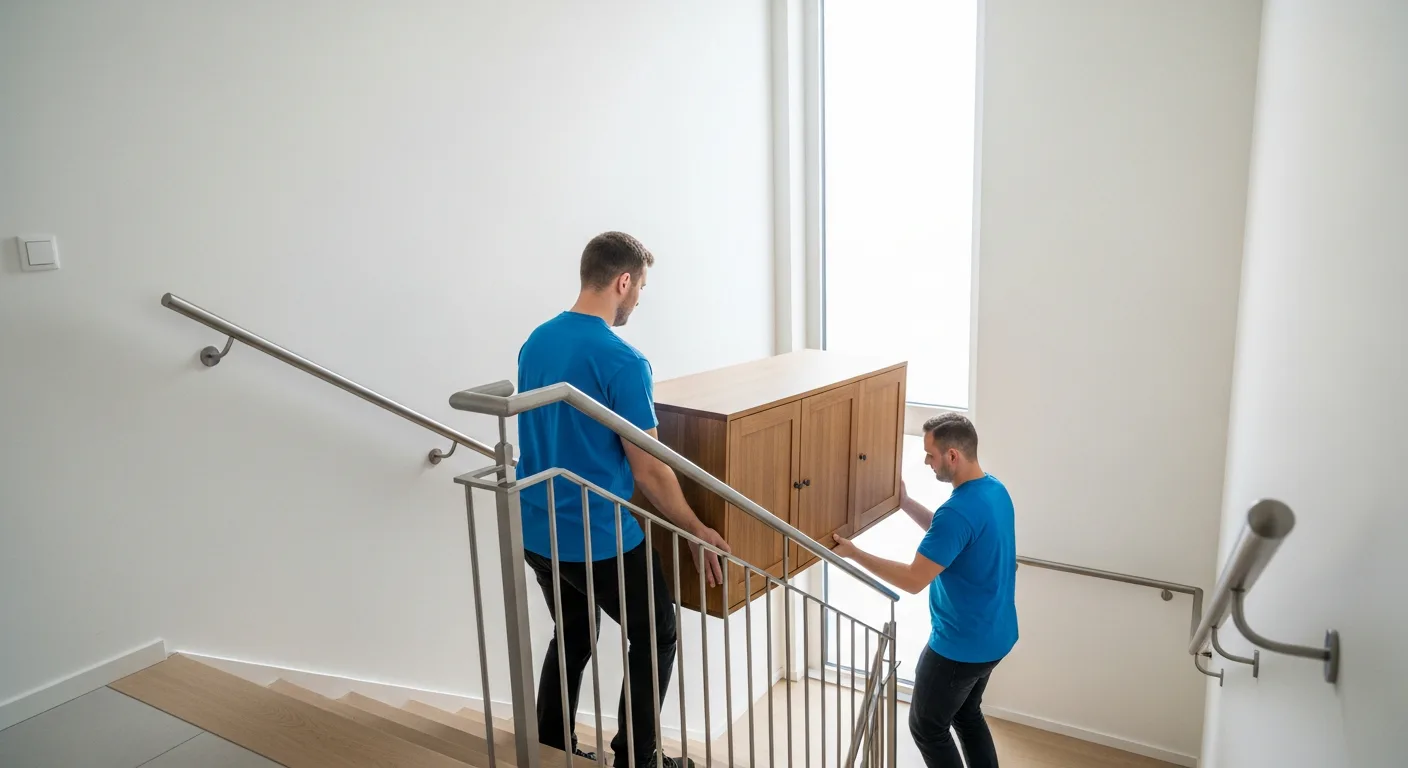
During a complete change of accommodation, the do-it-yourself approach quickly reaches its limits. If, in addition to packing and moving, you also have to empty the cellar and attic, time quickly becomes scarce. Especially on traditional moving dates in Switzerland (end of March, end of June and end of September), recycling centers are very busy, leading to long waits. A professional evacuation then quotes considerable advantages.
A dumping company takes care of the transport, sorting and removal. Small mandates depend on volume and access; for entire dwellings, the price varies greatly depending on the volume, the floor, the elevator, the distances to be covered, the recoverable objects and the discharge costs. An in-depth overview can be found in the guide to flat emptying in Switzerland.
Only an quote with a clearly defined scope of services is binding. Check whether dismantling, carrying, vehicle, sorting and evacuation costs are included in a flat rate or billed for time spent.
Timing and margin during evacuation: the planner's perspective
At the heart of the stress of moving, we often underestimate the time needed to empty. Structured decluttering should begin at least four to six weeks before the moving date. Distribute the rooms systematically: start with the cellar or attic, where the most bulky objects that you do not need on a daily basis are generally located.
It is essential to allow a margin of at least two days before the official handover of the accommodation. If you dispose of it yourself, you must take into account the opening hours of local recycling centers, which are often reduced on Saturday afternoons or public holidays. For professional emptying, ask for quotes at least four weeks in advance, as serious service providers fill up quickly at the traditional end of the quarter in Switzerland.
DIY or emptying company?
Own work can be cheaper if you have a vehicle, time and help. For larger volumes or difficult access, a professional retainer may be more predictable. Via our comparison platform, you can request several quotes with an identical scope of services.
Early decluttering reduces the volume to be moved. Compare the services of a moving company, a emptying company and a company specializing in evacuation. For temporary space, there are storage quotes; after departure, a flat cleaning may be useful. Calculate these items with moving costs.
Compare evacuation companies in your area
Local costs and journeys influence the quote. Compare specialist providers for evacuation in Zurich, evacuation in Bern or evacuation in Basel.