

Cellar, attic and garage accumulate very varied objects over the years: furniture, electrical appliances, paintings, tires, files and souvenirs. Anyone who describes everything as “bulky” gets quotes that are difficult to compare and risks poor disposal channels. A clearance therefore begins with the categories, not with the truck.
Make work area safe first
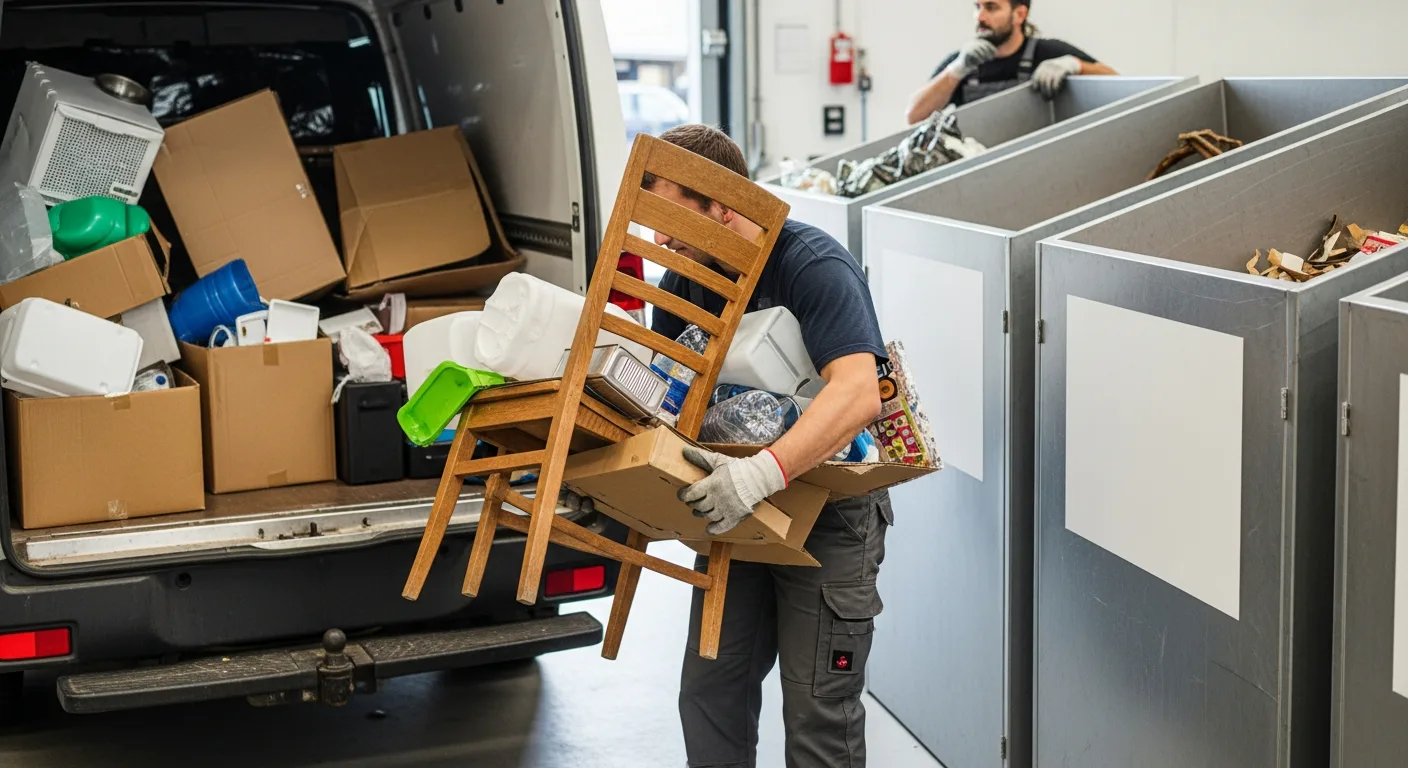
Ensure lighting, free evacuation routes and stable access. Do not open unknown, damaged or leaking containers. Heavy objects remain in place until the weight and transport route are clarified. In buildings for shared use, agree on the date, elevator and intermediate areas with the management or concierge.
Sort into five decision groups
- Keep:clearly mark the destination room or storage location.
- Transmit or sell : only realistically recoverable objects with a deadline.
- Recycling: separate according to the material and the recovery channel.
- Special waste : paints, chemicals, oils and similar substances to be set aside separately.
- Remaining disposal: only after clarification of local acceptance rules.
Avoid an area “decide later” without limit. Set a small area and a decision date.
Treat electrical appliances separately
Old computers, lighting fixtures, refrigeration appliances, tools and household appliances do not belong in garbage or bulky items. The Federal Office for the Environment explains the take-back of electrical and electronic devices: traders who quote comparable devices must take back used devices free of charge even without a new purchase; consumers must hand them over to a designated recovery channel.
For data carriers, it must be decided internally before recovery whether the data should be securely erased or whether the carriers should be destroyed. The clearance company should not silently decide on sensitive content.
Do not mix special waste
Paints, lacquers, solvents, cleaning chemicals, phytosanitary products, batteries and oils require suitable acceptance points. The rules and free quantities may vary depending on the canton or municipality. As an example, the canton of Zurich describes the take-back via points of sale, the special waste vehicle and the cantonal center . Check the current regulations for your place of residence.
The original packaging and labels should, wherever possible and safely, be retained. Do not mix or transfer unknown substances.
Create an inventory list for the visit
Photograph each room completely and note the approximate volume, large single objects, stairs, doors and distance to the vehicle. Mark electrical appliances, special waste and items with possible resale value separately. The existing guide on bulky items and the clearance company helps you choose the disposal route.
What the clearance quote must contain
- exactly designated parts and desired final state
- sorting on site or already preselected inventory
- carry, vehicle, floors, elevator and carrying routes
- electrical appliances, special waste and other fractions separately
- return of valuables only with individually named objects and amounts
- proof of disposal or handover, if necessary
- swept, cleaned or empty: clear definition
- additional cost only after agreed authorization
Check delivery
Go room by room according to the list. Check the additional surfaces, shelves and agreed arrangements. Have remaining items documented. For a rental property, “swept” is not automatically a complete move-out cleaning; treat the two as separate services.
Select realistically what is valuable
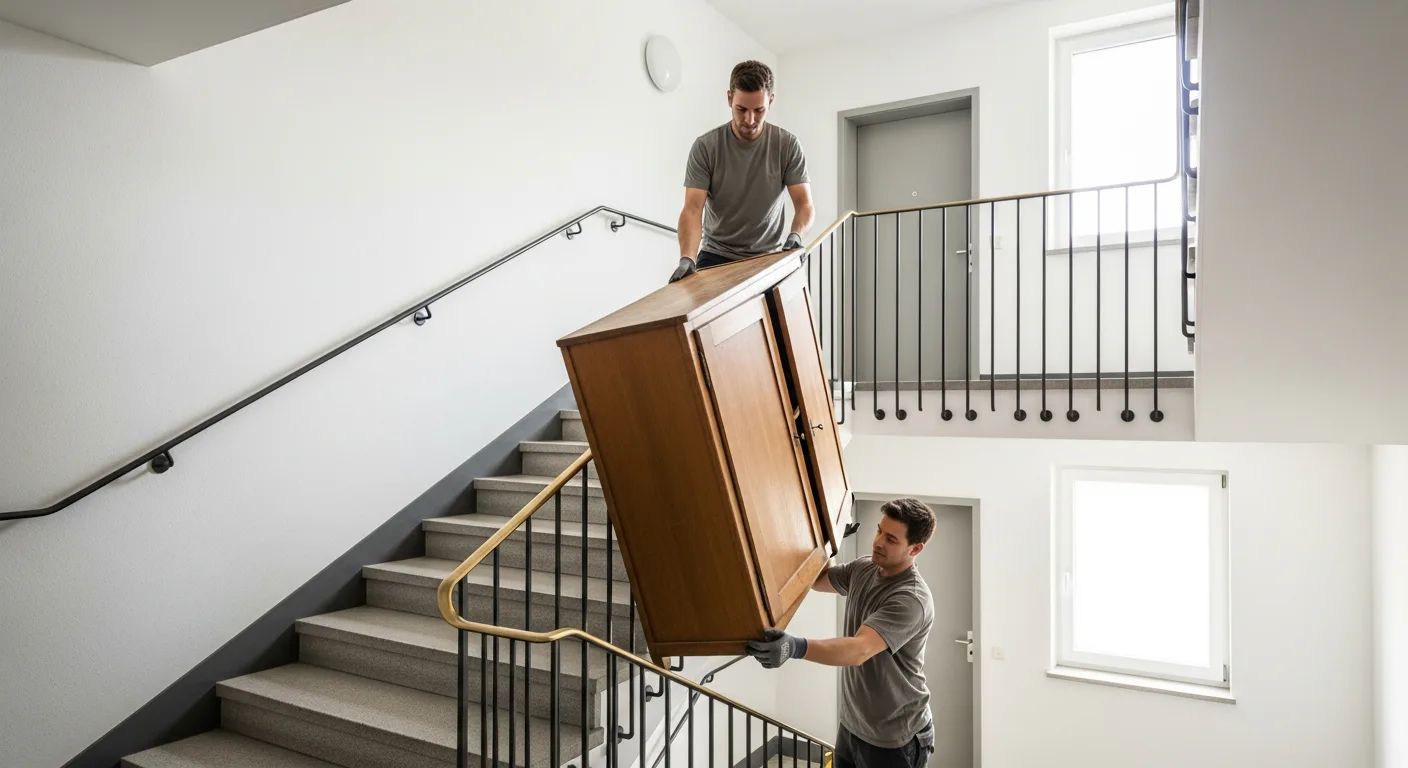
Not all old items have a creditable market value. Condition, completeness, demand, transportation and storage effort influence whether selling or donating makes sense. Set a short deadline. Anything that is not firmly taken back before this date follows the agreed disposal route. Personal mementos must be stored separately before the visit.
Mark heavy and unknown objects
Ovens, workbenches, full cabinets, stacks of tires or large metal parts require indications of weight and accessibility. Do not open old pressure containers or unlabeled cans. Photograph them from a safe distance and report them to providers in advance. A general clearance quote must not silently include these risks.
Check local acceptance conditions
Collection centers distinguish between private and professional quantities, materials and opening times. Before a personal delivery, check whether your municipality requires a card, sticker or registration. For a company, the quote must indicate where the fractions go and what costs are already included. A proof of disposal can be useful for certain orders, but is not designed in the same way for every private object.
Combining clearance and cleaning
Only after a complete clearance can it be seen whether the floor, shelves and walls only need to be swept or cleaned more thoroughly. Describe cleaning as a second phase with its own scope. In the garage and cellar, traces of oil, humidity or structural damage may exist which are not covered by an ordinary cleaning service.
Practical procedure on the day of clearance
- Lock the areas to be kept and archives.
- Make the delivery list and contact person available.
- Keep special waste and electrical appliances separate and visible.
- Confirm the recovery of valuable objects before evacuation.
- After completion, check all additional rooms and surfaces.
- Archive all supporting documents and final protocol.
Document before and after
Photograph the initial state without making confidential documents readable. After completion, document empty areas, remaining fixtures and visible damage. Record which items were passed on, credited or disposed of separately. The documentation is particularly useful if several family members, a management company or a company are involved in the authorization. It does not replace proof of disposal, but shows that the agreed scope of premises and final condition have been checked together.
Reserve a closed box for personal documents, keys, photos and small valuables which is not part of the clearance mandate. This clear exclusion zone prevents important items from being inadvertently taken away under time pressure.
Empty and dispose of ancillary rooms systematically
Professional clearance separates reuse, recycling, special waste and residual disposal. Good preparation creates transparency and prevents sensitive or dangerous objects from ending up in the wrong channel. Online-Offerten.ch does not clear out itself; via the free request you can compare suitable clearance and disposal companies.


