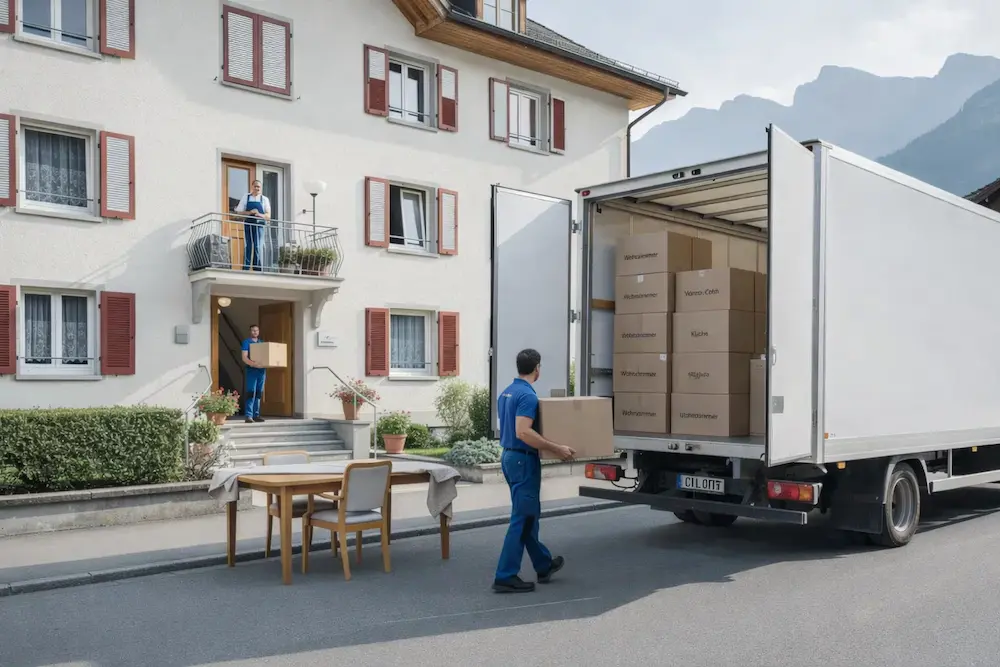

The clearing an estate in Switzerland is demanding on an organizational and emotional level. After a death, personal documents, souvenirs, furniture and household effects must be classified before the intervention of a clearance company. A clear order protects important items and makes it easier to compare quotes.
1. Prepare the estate clearance
First determine who is authorized to make decisions and who serves as the contact for relatives, management and the clearance company. If several people participate, establish a common list: what must remain intact, be distributed or can be taken care of by the company?
Also define the timetable and the desired end state. A home can simply be returned empty, swept – that is to say, summarily cleared of loose dirt – or completely cleaned. These services should not be confused.
2. Protect documents and personal objects
Before sorting furniture, place identity documents, contracts, keys, tax documents, photos, jewelry and data carriers in a clearly marked exclusion zone. These objects are not part of the clearance mandate.
A closed crate or a separate room is practical. The team therefore does not have to ask questions for each personal item and the risk of accidental disposal decreases.
3. Establish the inventory and check valuable objects
Inventory the accommodation room by room and include the cellar, attic, garage and storage rooms from the start. Overall photos show the volume; close-ups document notable furnishings or collections.
When in doubt, have quality antiques, artwork, jewelry or collections independently appraised. A clearance company can take back valuable objects, but should not be the only body to determine a potentially high value.
What a visit should note
- Volume and furniture of all rooms
- Cellar, attic, garage and other ancillary surfaces
- Floor, elevator and carrying routes
- Heavy or bulky objects
- Special waste or electrical appliances visible
- Possible recoverable objects
- Desired final state
4. Keep, sell, give away or dispose of
Divide household effects into clear categories. Objects taken back by relatives are marked or removed before clearance. Items in good condition can be sold or passed on; those which are not recoverable are directed to the appropriate disposal channels.
The annexed premises often contain additional quantities invisible in the photos of the accommodation. The guide Emptying the cellar, attic and garage provides planning advice.
5. Compare companies and clearance quotes
To be seriously comparable, a clearance quote must be based on the same scope of services. Send all service providers the same information on the rooms, photos, access conditions and requirements.
The quote must at least clearly describe the extent of the clearance, evacuation, disposal, possible dismantling, the desired final state and possible additional services. For complete estate housing, a visit is often more telling than just the number of rooms.
General information on the conduct of a professional clearance in Switzerland helps to situate the services.
6. Agree in writing on the recovery of valuable objects
During a return of valuable objects, the agreed value of valuable objects reduces the price of clearance. Transparency is essential: the object and the amount credited must be indicated in an understandable way.
First compare the price of the clearance before deduction, then the final remaining amount. This way you can see if a high trade-in really leads to a better overall quote. The guide Recovering valuable items during clearance gives more details.
7. Do not forget the cellar, the attic and the garage
The annexed premises are easily underestimated during an estate clearance. They often contain tools, files, tires, electrical appliances or souvenirs. Mention these surfaces when requesting and have them explicitly included in the quote.
Particularly important point: do not treat unknown liquids, chemicals or other problematic substances as ordinary household effects. The appropriate disposal route must be clarified separately.
8. Define the final state and handover of the accommodation
Define in writing what is expected at the end: empty accommodation, swept or also cleaned. Fixed fixtures, lights, cellar compartments and keys must also be assigned unambiguously.
For rented accommodation, agree the date and handover requirements with the management or the owner early enough. After clearing, preferably carry out a joint final inspection with photos.
9. Common mistakes when clearing an estate
- Starting the clearance before having secured the personal documents
- Requesting an quote for the accommodation only, without the annexed premises
- Include valuable items in the storage room without verification
- Agree orally only on the recovery of valuable objects
- Confuse “empty”, “swept” and “cleaned”
- Compare only the final price of quotes with services different
- Fix the discount without time margin
10. Short checklist for loved ones
- Designate a contact person authorized to decide
- Put documents, keys and personal souvenirs away
- Inventory the accommodation and all ancillary premises
- Have any valuable objects checked separately
- Mark what must be kept, sold, transmitted or disposed of
- Define an identical scope for several quotes of clearance
- Indicate in writing the recovery of valuable objects
- Set the final state and the delivery date
- Document the control final
Finish the clearance of an estate with respect and traceability
A succession clearance does not gain in quality because it begins as quickly as possible. You must first protect personal and potentially valuable objects, then define the real extent of the clearance. A comprehensive inventory, transparent recovery of valuables and an unambiguously agreed final status enable companies to be compared in a significantly more serious manner.