
The lease contract has been terminated, the boxes are ready and the move is approaching. But before handing over the keys for good, two of the most delicate administrative obstacles in Swiss lease law still await you: the release of the security deposit and the joint observation of defects. Conflicts between tenants and management are unfortunately not rare at this stage. These often involve large sums, unclear deadlines or the question of who is responsible for the wear and tear of the accommodation.
The legal framework of the security deposit in Switzerland
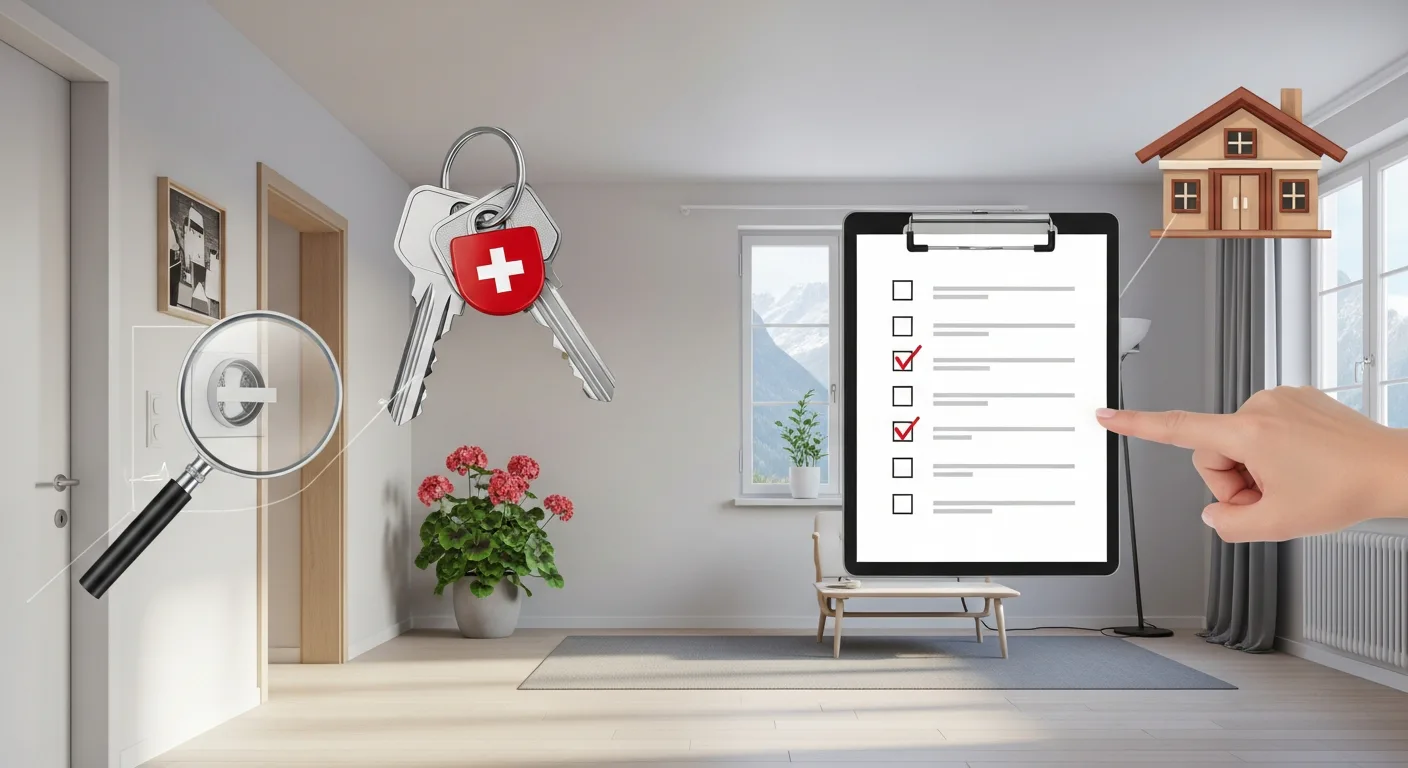
The security deposit – officially called “tenant guarantee” in the law (art. 257e CO) – serves the lessor as financial security to unpaid rent or damage to housing. In Switzerland, strict legal rules apply, which cannot be changed by contract:
Maximum amount: for the rental of accommodation, the lessor can only demand a maximum of three net monthly rents as guarantee.
Mandatory blocked account: the lessor cannot under any circumstances pay the money into his private account or accept it in cash. For the rental of accommodation, art. 257th CO governs the deposit of security into an account or deposit in the name of the tenant.
Check deposit account: interest rates and conditions vary by bank and are appropriate. Determinants are the account holder, the blocking notice and the written conditions of release.
For the calculation of damages, the joint lifespan table of the Tenants' Association (ASLOCA) and the Swiss Landowners' Association (USPI) is decisive. You are never responsible for the replacement value of a damaged item, but only for its residual value. When valuing an old mural, its residual value is often taken into account. However, the lifespan, condition and concrete liability must be checked in each case.
To avoid unpleasant surprises when handing over, use our checklist for handing over housing or consult our guide on handing over housing to find out more the exact procedure on the day of handover.
Before handing over the accommodation: five steps
Collect the lease contract, the entry protocol and the declarations of defects previous.
Inspect the accommodation in broad daylight and photographically document existing damage.
Distinguish normal wear and tear from possible damage; record the disputed points in writing.
Read the surrender protocol in full and only confirm comprehensible findings.
Clarify in writing the release of the deposit and any reservations.
When is the security deposit released?
Release depends on surrender, outstanding claims and the consent of the parties involved or legal proceedings. Fixed deadlines are not suitable in all cases. Request written justification for the reservations and, if necessary, have the disputed claims professionally examined.
After emptying the accommodation, a professional cleaning can prepare for the handover. Depending on your regional needs, compare end of lease cleaning in Zurich, end of lease cleaning in Bern or end of lease cleaning in Basel.
Release of security deposit in practice
After handover, open items, possible claims and release of the deposit account must be documented in writing. For deductions, require understandable justification and supporting documentation. Do not sign a fixed acknowledgment if the cause or the amount is not clear.
Check list for finding defects
Have the entry protocol and previous damage available reported.
Completely list parts, devices and keys.
Specifically describe the findings and photograph.
Note normal wear and possible damage separately.
Record reservations directly in the protocol and request a copy.
For legally or financially contentious issues, regional conciliation services, tenant advice or legal advice can help.