

A change of accommodation in Switzerland is a major logistical and financial project for each household. When a family with children, pets and a significant amount of furniture moves, the demands increase quickly. In addition to pure transport costs and organizational effort, a financial item occupies a central place: the security deposit. For a family flat of 4.5 or 5.5 rooms, the gross rent quickly weighs heavily and landlords often require considerable guarantees. Three gross monthly rents (legal ceiling often three months) quickly add up to a five-figure amount – the following rent example is illustrative, not a rental scale.
In this situation, families must make a fundamental decision: should the money be blocked in a traditional bank account, or is security deposit insurance the better, more liquidity-friendly alternative? Both systems have specific advantages and disadvantages, which are particularly manifested in the context of an active family home with an increased risk of wear and tear. We outline the legal framework, analyze the actual costs of both models over several years and explain how to get your deposit back after departure without conflict.
Legal basis for security deposit in Switzerland
Swiss rental law very precisely governs the deposit of guarantees in order to protect tenants against arbitrariness and loss of their money. The most important legal basis is found in art. 257th CO of the Swiss Code of Obligations. It is provided that the lessor can only require a maximum of three gross monthly rents as a guarantee for the rental of accommodation. This ceiling is absolutely imperative and cannot be exceeded by contract.
Another point, often violated in practice, concerns the form of the deposit. The law requires that the security deposit be paid to a bank into a savings account or a deposit must be made in the name of the tenant. The lessor must therefore under no circumstances have the money paid into his private current account or manage it himself. If this happens despite everything, there is a breach of the fiduciary relationship. In the event of the lessor's bankruptcy, the money in a private account would not be protected. A proper blocked account, on the other hand, fully protects the family's savings against access by third-party creditors.
According to the guidelines of the Tenants' Association (ASLOCA), tenants have the right to demand payment into a legally compliant blocked account before the money is transferred. If the lessor does not pay the money in accordance with the rules, the tenant can open the deposit with a bank himself or refuse the payment until a corresponding account is opened in his name.
The classic bank blocked account: operation and costs
The classic bank blocked account is the traditional way to deposit the rental guarantee. The family pays the required guarantee sum into a savings account specially opened with a Swiss bank. This money is blocked for the entire duration of the lease. Neither the tenant nor the lessor can dispose of the balance during the term of the lease without the consent of the other party.
From a financial point of view, the bank blocked account has lost its appeal in recent years. Although the level of interest rates has changed slightly in Switzerland, banks still only quote micro-minimum rates on rental guarantee accounts, significantly below the rate of inflation. At the same time, many banks charge opening or closing fees; the current amount is indicated by the bank. This further reduces the already low return on the blocked money.
For families, however, the loss of liquidity generally weighs more heavily than the lack of interest. If CHF 6'000 or more remains unused in an account for years, this money is often missing for other important purchases – whether for furnishing children's rooms, for unforeseen repairs or for paying moving costs. Nevertheless, the bank deposit remains the safest method, because the money remains the property of the family and is repaid in full after a problem-free departure, including (small) interest.
Security deposit insurance: practical liquidity or expensive trap?
To reduce the financial burden when entering the premises, many families opt for a security deposit insurance. Instead of blocking money in an escrow account, the tenant concludes a contract with a guarantee fund or insurance. The latter acts as guarantor to the lessor for the amount of the deposit. In return, the family pays a non-refundable annual premium, which generally amounts to 4% to 5% of the guarantee amount, plus the statutory stamp duty of 5%.
Deposit insurance preserves liquidity, but is not liability insurance and does not definitively cover damage to the home. If a legitimate claim is paid under the guarantee – for example with the consent of the tenant or on the basis of a binding decision – the provider can recover the amount paid from the tenant in accordance with the contract. Therefore, check the premium, recourse, termination and exclusions before concluding the contract.
In addition, annual premiums are lost. Over a long lease term, these payments add up to considerable amounts, without a single franc being refunded to the tenant at the end. For families who plan to stay in accommodation for a long time, deposit insurance therefore quickly becomes a very expensive affair.
Direct cost comparison: bank deposit vs deposit insurance
To illustrate the financial scale of the decision, a concrete calculation example is worthwhile. We start from a typical family home with a guarantee of CHF 6'000. The interest rate on the bank account is assumed to be 0.1%, while the deposit insurance requires an annual premium of 4.5% (plus 5% deposit duty). stamp).
| Duration of the lease | Bank blocked account (fees and interest) | Deposit insurance (lost premiums) | Difference financial |
|---|---|---|---|
| 1 year | approx. CHF -20 (opening costs less interest) | approx. CHF 283.50 | CHF 263.50 in favor of the bank account |
| 3 years | approx. CHF -10 (closing costs less interest) | approx. CHF 850.50 | CHF 840.50 in favor of the bank account |
| 5 years | approx. CHF 0 (interest covers costs) | approx. CHF 1'417.50 | CHF 1'417.50 in favor of the bank account |
| 10 years | approx. CHF +20 (net interest yield after fees) | approx. CHF 2'835.00 | CHF 2'855.00 in favor of the bank account |
The table constitutes a calculation model with the above assumptions and is not a provider or market comparison. Actual premiums, stamp duty, minimum premiums, bank charges and interest may vary. The use that the family could make of the linked capital is not taken into account. For a current comparison, the explanations of Moneyland may for example be suitable; then calculate with the concrete quotes.
Family risk factor: damage by children, animals and heavy furniture
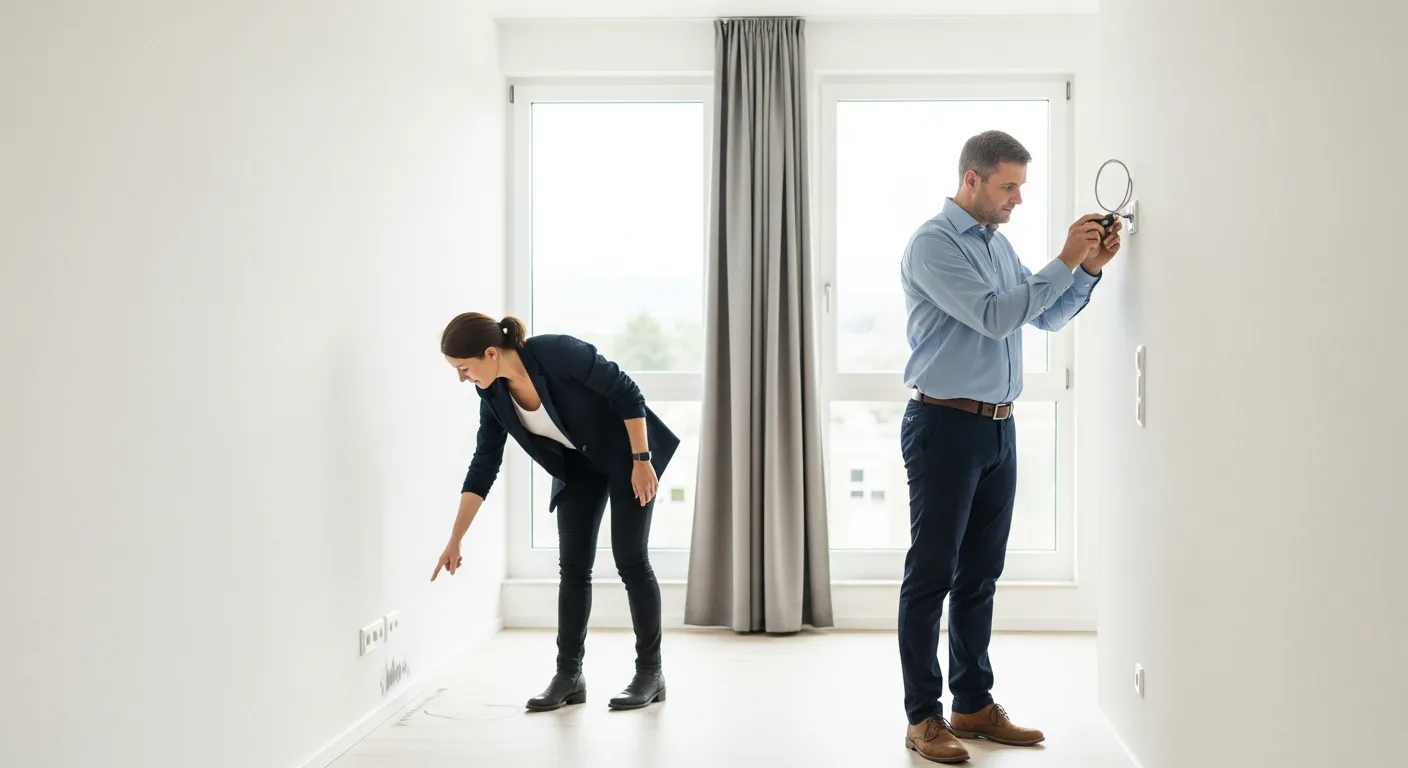
In a household with children and animals, the probability of wear and tear and minor damage is naturally higher than in a single-person household. Colored pencil drawings on the walls, scratches in the parquet floor caused by a toy car or cat claw marks on the door frames are typical scenarios. When moving a large amount of furniture, scratches in the stairwell or on door frames also occur quickly.
When handing over the home, this often leads to discussions about what constitutes "normal wear and tear" and "excessive wear and tear". Normal wear and tear is covered by the rent and cannot be deducted from the security deposit. Excessive wear and tear must, however, be covered by the tenant or their private liability insurance. Only the current value according to the life expectancy table is due, never the replacement value.
To avoid costly deductions from the deposit, families should correct small defects professionally before handing over. This includes, for example, correct filling of drill holes. To find out how best to proceed, consult the guide on dowel holes when moving . It is also recommended to commission a cleaning company offering professional end of tenancy cleaning with guarantee of acceptance, to rule out any complaints about handover from the outset. In the event of a dispute over damages, consult our article on the rental guarantee and the detection of defects.
Recovering the rental guarantee: deadlines and settlement of disputes
After the successful handover of the accommodation, the families ask how quickly they can get back their blocked money. According to the law, the lessor must release the deposit as soon as all debts from the lease have been settled. If there are no claims in the release protocol and no rent or incidental charges are outstanding, release should occur within a few days to a few weeks. To do this, both parties must sign the bank's release form.
This becomes more difficult if the lessor refuses to sign or makes unjustified claims. For this case, Swiss law provides for protection periods. In practice, the lessor is often given a period of around three months to wait for invoices from craftsmen and present a verifiable final statement; however, this is not a rigid legal deadline. For incidental charges still pending, he can retain an appropriate part of the guarantee, but must release the rest.
A particularly important right for tenants is the one-year period according to art. 257th par. 3CO. If the lessor has not taken legal action (such as a lawsuit, conciliation request or legal action) against the tenant within one year after the end of the lease, the bank must pay the security deposit to the tenant even without the consent of the lessor. For this, a written request from the tenant to the relevant bank, with confirmation of termination and the handover protocol, is sufficient.
Practical guide: how families protect their security deposit
So that the transfer of the security deposit during the move goes smoothly and the family budget is not overburdened, you should proceed in an appropriate manner. structured. The following list summarizes the most important steps for families:
- Advance budget planning:Calculate the potential costs of the new deposit early. If necessary, use a tool to calculate your moving costs, in order to know how much liquidity you have left for the blocked account.
- Document the condition: Upon entering the new accommodation, establish a detailed protocol with photos of all existing defects. This protects you upon subsequent departure against unjustified claims.
- Check insurance contracts: Make sure that your private liability insurance covers damage to rented objects (including by children and animals). This is the best protection for your deposit.
- Use deposit insurance only as a transitional solution: If you need to finance the entry guarantee via insurance, consider converting it to a normal bank deposit during the lease, as soon as your financial situation has stabilized. A change is often possible, but requires the consent of the lessor, payment of the replacement guarantee and release of the deposit; check the provider's conditions.
- Request professional support: If you need to remove old furniture initially to restore the property to a clean state, a empty in Zurich or in your region can save a lot of stress and reduce the risk of transport damage in the stairwell.
The longer the lease term, the greater the non-refundable recurring premiums. Therefore, compare the planned lease term, the available liquidity and the concrete conditions of the providers rather than general assumptions about family homes.
Consciously choosing bank deposit or deposit insurance
The decision between a bank blocked account and security deposit insurance should be carefully considered. If insurance can alleviate financial difficulties when moving in the short term, in the long term it almost always turns out to be a costly trap. Families already faced with higher expenses come out significantly cheaper and safer with the traditional bank deposit. Through careful documentation when handing over the accommodation, correcting small defects before departure and using professional services, the risk of deductions from the guarantee can be minimized, so that the blocked money is quickly available to the family again after the move. At Online-Offerten.ch you will find the right partners for your move, to save money and make the change as stress-free as possible.
You will find additional information on adapted services here: Emptying.


